Anti-Bullying Activities That Actually Work in Upper Elementary
Apr 23, 2026
💛 Simple Friendship Lessons & SEL Strategies for Grades 3–5
Bullying is one of the hardest challenges to navigate in upper elementary classrooms.
It can show up in subtle ways—hurtful comments, exclusion, eye rolls—or more direct behaviors that impact a child’s confidence and sense of safety.
And if you’re a teacher or parent, it can feel overwhelming to know:
👉 what to say
👉 how to respond
👉 what actually helps
The good news?
You don’t need complicated programs.
👉 You need consistent, meaningful anti-bullying activities that build empathy, communication, and connection.
In this post, we’ll walk through simple, effective strategies that actually work for Grades 3–5, especially for kids who need extra social-emotional support.
🧠 Why Anti-Bullying Lessons Matter More in Upper Elementary
As kids grow, social dynamics become more complex.
Students begin to:
• notice differences
• form stronger peer groups
• test boundaries
• struggle with social awareness
For children with ADHD or autism, this can be even more challenging.
They may:
👉 misread social cues
👉 react impulsively
👉 struggle with friendships
That’s why explicit teaching is key.
🌟 What Actually Works (Hint: It’s Not Just Talking About It)
One-time conversations don’t stick.
Instead, students need:
✔ repeated exposure
✔ real-life scenarios
✔ guided practice
✔ safe discussions
👉 That’s where structured activities come in.
💬 7 Anti-Bullying Activities That Actually Work
🤝 1. Friendship Scenario Discussions
Give students real-life situations like:
👉 “Someone is left out at recess”
👉 “A student is being teased”
Ask:
- What is happening?
- How does it feel?
- What would you do?
Why it works:
Builds empathy and problem-solving skills.
✏️ 2. Reflection Writing Prompts
Have students respond to prompts like:
• “What makes a good friend?”
• “How can you help someone feel included?”
Why it works:
Encourages deeper thinking and personal connection.
🎭 3. Role-Playing Activities
Let students act out scenarios and practice:
✔ kind responses
✔ standing up for others
✔ problem-solving
Why it works:
Turns learning into real-life practice.
💛 4. Kindness Challenge
Create a simple weekly challenge:
👉 say something kind
👉 include someone new
👉 help a classmate
Why it works:
Builds positive habits over time.
🧩 5. Collaborative Activities
Use group projects like:
👉 class posters
👉 shared art
👉 team tasks
Why it works:
Encourages teamwork and connection.
🧠 6. “Think Before You Speak” Lessons
Teach students to pause and ask:
👉 Is it kind?
👉 Is it helpful?
👉 Is it true?
Why it works:
Builds self-awareness and control.
🌿 7. Calm Down & Reset Strategies
When emotions run high:
✔ offer a break
✔ use calming tools
✔ guide reflection
Why it works:
Prevents escalation and supports regulation.
🏫 How to Build a Positive Classroom Culture
The goal isn’t just to stop bullying…
👉 it’s to create a classroom where it’s less likely to happen.
Focus on:
✔ clear expectations
✔ consistent routines
✔ positive reinforcement
✔ open communication
🏡 For Parents: What You Can Do at Home
You can support your child by:
✔ talking about friendships
✔ modeling kindness
✔ role-playing situations
✔ encouraging communication
💛 Why SEL Matters for Every Child
Social-emotional learning helps kids:
✨ feel safe
✨ build confidence
✨ develop relationships
✨ succeed academically
And for neurodivergent learners?
👉 it’s essential.
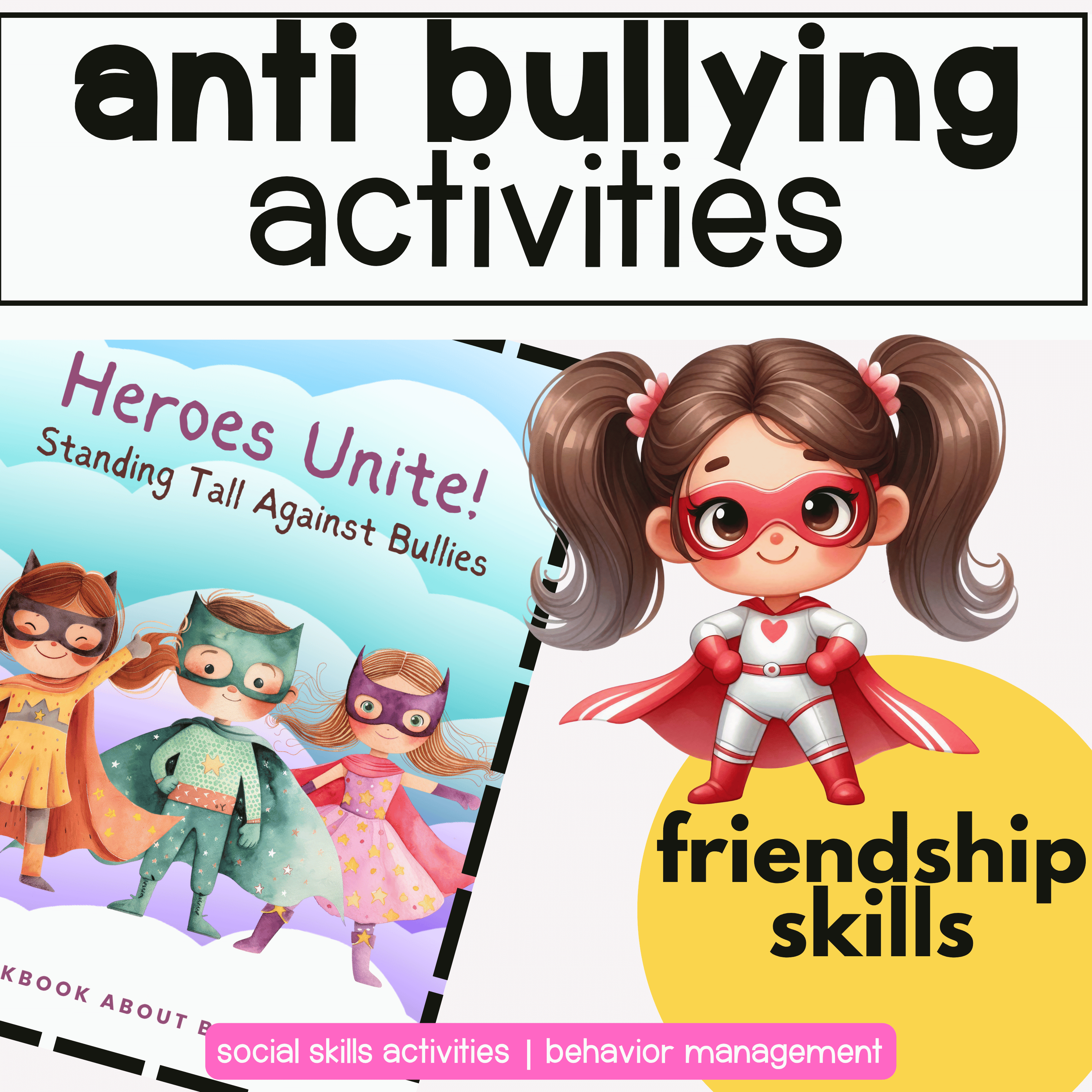
🎁 Want Ready-to-Use Anti-Bullying Activities?
If you’re looking for simple, effective lessons you can use right away…
👉 printable anti-bullying and friendship activities can make this process SO much easier.
They provide:
✔ structure
✔ consistency
✔ meaningful engagement
✨ Final Thoughts
Bullying prevention doesn’t come from one lesson.
It comes from:
👉 consistent practice
👉 meaningful conversations
👉 intentional activities
With the right tools, you can help your students:
💛 build empathy
💛 strengthen friendships
💛 feel safe and supported
💛 Other Posts You Might Enjoy
• Calm Down Strategies for Kids
Start With One Quick Win Today
✨ Want calmer days without the overwhelm?
Join our email list for simple calm tips, quick wins, and tools that actually help.
No noise. Just support.
We hate SPAM. We will never sell your information, for any reason.
Creator